Let's finish off our Blue Seed anniversary retrospective with the manga that started it all. Supposedly, and contrary to what one would think, the premise of Blue Seed actually came from Ashi Productions and Production I.G, who gave mangaka and writer Yuzo Takada some ideas to develop. From the core concept he drafted and created characters and the overall storyline, taking inspiration from pop culture and genre efforts in order to modernize the original Izumo myth from Japanese folklore. The resulting Shōnen manga was published by Takeshobo in the Comic Ganma magazine from 1992 to 1996 and it only lasted for two volumes and 17.5 chapters.
The overall story is very similar to what we have seen in the anime but there are some significant differences. If you wanna know about the general story you can read my review of the TV series. Since my introduction to the series was the anime, my review of the manga will also compare the two works as my opinion of it is closely related to the way I see the anime but it's not a comparison thats fully tainted as I gave both the same chance, you can also extract the virtues and flaws of each work by what I have to say about them.
Here are the major differences (without spoilers):
-The manga puts more emphasis on Momiji and focuses more on telling the story through her point of view instead of alternating between the main cast all the time. The very first scene in the manga is Momiji taking a bath with her grandma, a scene that comes much later in the first episode of the anime. The events are told to us as Momiji learns about them, most of the info is revealed to her and to the audience at the same time, at least in the first chapter. The manga goes for a more mysterious tone because of this.
-The Aragami only attack at night time. This makes them pretty much useless during the day, the creatures have to wait until the sun is covered to attack. This also makes Kusanagi more vulnerable instead of the incredibly powerful hybrid he is in the anime, he has trouble going after Momiji during their first encounter, she even punches him, revealing that he is just another human in the daytime.
-Characterizations are mostly the same but they went through some slight differences in the manga. Momiji is more silly and is stronger in the manga (fighting back more occasionally, even against Koume!) to the point of defeating some Aragami single handedly. Kusanagi is less of a douchebag and comes off as more considerate since he is less antagonistic and goes out of his way to save Momiji´s life instead of simply having no other option. Ryouko is more tough and less formal, a bit of a deviation when compared to the somewhat gentle lady we see in the animated version.
-The lore and the backstory of the curse and the Aragami are a lot more clearly explained here, the exposition comes off more naturally because it has to be explained to Momiji (us).
-The comedy is less prominent overall and it's implemented in small doses as the tone itself is lighter as a whole, so it wouldn't make sense to have strictly comedic sections. The running gag of Momiji showing her panties is present here but it's not a focus.
-Some characters have more interactions here than in the anime. They also work together as a team in a more traditional fashion than before. Koume and Sakura, for example, share more conversations and moments together than what we see in the TV series.
-A lot of the important plot points in the anime are introduced far earlier in the manga such as the appearance of Kaede and Sakura, making the story feel a bit cluttered at first but they handle the storyline quite efficiently and never allow it to be overstuffed. If anything, I now appreciate the anime for introducing these characters with more room to breathe in between.
-The secondary characters are sidelined even further here, which is expected, they serve their function very well and enrich the story as their distinct personalities come through and make the characters' interactions more dynamic. While we dont get more insight into them than a few panels or lines we can thank the anime for giving us more memorable moments with them.
-Factions like Japan's defense force have a more active, even antagonizing, role and they put our main group in peril multiple times, allowing for the stakes to be increased and the danger to be more prominent, having to face more than just the Aragami. This also happens in the show but very late into the story.
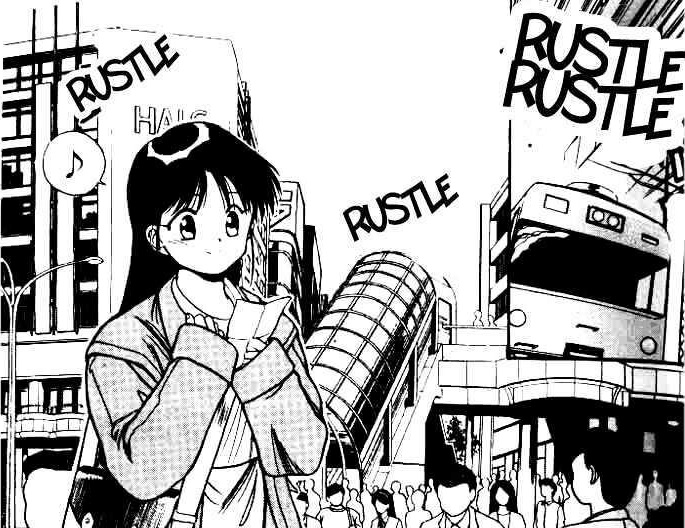
But not everything can be compared, as the manga has some elements that stand on their own. The artwork is detailed and solid for a good amount of the pages, there are typical corners that are cut but not in a distracting manner, the drawings might be a little rough in a handful of panels but it's clear the effort mostly went into the larger and more important illustrations, creating some very memorable images. There are also some really intense stretches of storytelling that require almost no dialogue, playing to the strengths of its medium.
I appreciate the manga and anime for different reasons. The manga has a smaller scale and is considerably more focused while the anime is more bombastic, elongated and epic. The anime has more opportunity to flesh out concepts and ideas and, while it wasn't successful at everything, it managed to inject more life into the story, the additions like the character introductions and more time to show their dynamics made them more memorable and impactful in the anime as well.
Meanwhile, the manga had to resume and convey interactions and information in brief and concrete ways that the show had more time to explore and with more hindsight. A lot of it simply has to do with the medium and the way these works are produced. I will also warn you not to expect an ending, because it doesn't really have one, at least not one that's as truly satisfying and emotional as the one from the anime.
In my opinion, the manga really required more time and room to develop and fulfill its potential, because two short volumes don't really cut it. A strange thing is that it was never properly continued or extended considering the fact that it was far from a failure. Takada has admitted that Blue Seed would have benefited from being a light novel instead of a short manga, as a lot of the concepts could have been explored further. This is part of why some fans consider the anime show to be the most complete version of the story.
This closes our Blue Seed retrospective. A very nostalgic and enjoyable ride. Totally check out the series as it runs the risk of falling into obscurity after all these years with very little discourse surrounding it, but there are a lot of great aspects that make Blue Seed timeless and lovable.
Blue Seed is a cult anime show that kind of got buried among the sea of great animation produced in Japan throughout the 90's, one that was able to balance action, horror, kaiju destruction, romance, comedy and drama quite well. Released in 1994 and based on a manga by Yuzo Takada, Blue Seed is celebrating its 30th anniversary this October the 5th.
Blue Seed has its origins in Japanese mythology, like a lot of anime, but becomes a certain type of modernized version or sequel to the original story. It's an expansion and reinterpretation of the Izumo cycle in Japanese folklore, the main character is a descendant of the legendary Princess Kushinada featured in the Orochi myth, a typical tale of a princess saved from being sacrificed to a giant dragon by a hero, in this case Susanoo (the storm god) who guards the young maiden and defeats the beast.
Based on a similar premise, the show features 15 year old student Momiji finding herself entangled in a supernatural battle against strange beasts named Aragami (angry demonic gods) who have been let loose by the evil Orochi. A bizarre-looking man threatens Momiji one day and reveals to her that she is related to the previously mentioned princess, belonging to a lineage of women who share the same ties to her. Momiji is bewildered but she never really believes the man until she is attacked by a monstrous plant-like being, an Aragami.
Momiji ends up being saved by the strange man who tried to murder her earlier, since he is half Aragami he was cursed/gifted with special powers that allow him to battle against the monsters. The two begin a somewhat questionable relationship. Momiji protects Kusanagi by taking in the blue seed from the Aragami they are facing against, which gives her the ability to sense the presence of the beasts. After that, Momiji is recruited by the TAC (Terrestrial Administration Center), a government organization tasked with eliminating the Aragami, extracted from her small town and taken to the big city.
The TAC had previously been using Momiji´s unknown twin sister, Kaede, who sacrificed herself after the pressure and anxiety of being used by the government to stop the monsters finally caught up to her. She was adopted at a young age by the organization to keep her safe but when she went away Momiji became a target for the evil forces.
The rest of the show features Momiji traveling to the places where Aragami encounters take place and trying to stop the kaijus from ending humanity as we know it.
Being the main protagonist, Momiji is a very likable and adorable girl, always confident and with an optimistic attitude. She might be a bit too easy going sometimes, which makes her innocence a special flaw that puts her in danger occasionally and her reactions are perhaps too careless as she is capable of ignoring potential danger just because she is running late to school, something that actually happens in episode one. However, as she matures, falls in love and faces the dangers of her new responsibility, she grows and becomes a more independent and sharper person.
There's also this running gag with Momiji losing her skirt or exposing her underpants in public, much to her embarrassment, characters even comment on the childish prints she wears, always being exposed in a new pair with a different cute animal on them. It's another way of showing her immature and infantile side, but this becomes less prominent as the show goes on and her personality growth takes place.
Momiji was always told by her grandmother that she was special and that eventually the fate of humanity depended on her and her spiritual development and sacrifice. She never knew exactly what she was talking about but she often just brushed her words away as the strange beliefs of an old lady. It's kind of similar to Sailor Moon in that it's a story about a girl with special powers but with a very relatable and normal upbringing, who must learn to use and develop said powers in order to save the day as she comes of age and learns about love, maturity, responsibility and strength (although, unlike Sailor Moon, there's a slightly less emphasis on friendship here).
Among the TAC team we find old director Mr. Kunikida, who serves as the man in charge of the group and their operations. We also have the motherly science officer Azusa Matsudaira, who researches the Aragami in order to craft weapons that are effective against them. There´s an entire episode dedicated to Matsudaira´s workaholic attitude and its effect on her child. She is obsessed with examining subjects and testing out scientific theories with her research.
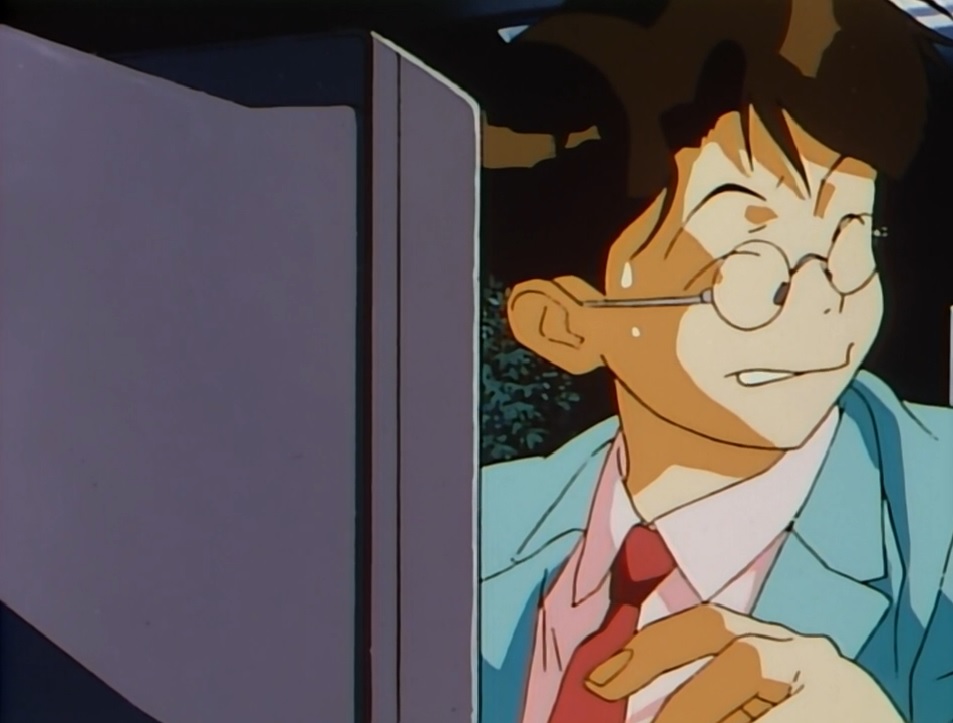
Yaegashi is a lovable nerd who becomes kind of creepy when we discover he has created a program to predict the pattern of animal panties Momiji wears. However, he has great contributions to the team as his devices and inventions are vital to get rid of the Aragami. He has an arc about proving his usefulness to the team. Supposedly he became meek because he was raised by women or something, of course this is a false stereotype but people back then used to believe things like that. He develops a romance with firecracker agent Koume, who's up next.
Koume is a pink jumpsuit-wearing tough warrior and former member of the Japanese Self-Defense Forces, which explains her no-nonsense attitude and love for violence and weapons (specially her rocket launcher). Her harsh methods and brash nature clash with Yaegashi's nerdy and soft behavior, which of course makes them the perfect couple, they develop a very cute relationship throughout the show.
I also find Koume´s relationship with Momiji quite funny, instead of being nice to her she behaves like an older sister and basically bullies her whenever she can, not out of hatred but out of considering her more of an annoyance than anything else but it is shown that she cares about the poor girl, so it's all good. Their moments together are always gold. At any rate, Koume is probably my favorite character of the bunch, episode four focuses on her troublesome relationship with Momiji only to bond with the girl during combat.
Ryouko is a former policewoman who serves on the field, along with Koume, fighting against the Aragami, both using their weapons to kill the monsters. She has a crush on daddy Mr. Kunikida. Probably the dullest aspect of the show, a waste of a potentially good character.
Sakura Yamazaki is an irritating, young and aggressive priestess, she uses her magical abilities to help Momiji and the team stop the Aragami but works mostly on her own. Sakura charms you with her superiority complex that is explored and explained in episode 18, when the Aragami that killed her mother comes back. She's a typical badly behaved girl but she is redeemed by the fact that she´s serious about hunting down Aragami, giving her more dimensions. There's a funny rivalry between her and Momiji, Momiji feels jealous because she is flirty towards Kusanagi and Sakura hates her because Momiji gets all of the media attention.
Every character in the show actually has his or her time to excel, some of them are entirely dedicated to their reaction to the Aragami attacks, their role within the TAC and their relationship with Momiji and/or another member of the team. All of them prove themselves to be more than just their archetype and some even reject it by becoming more tridimensional through their arcs. Some of this was present in the manga but the writers expanded these character studies with the anime.
When I rewatched the show it finally dawned on me just how epic and big in scope it truly was, at least initially. The economic storytelling of the first two episodes is perfectly executed and establishes all of the players and elements in a very engaging but brief way. The colorful and distinct characters all shine when working inside their group dynamics and relationships. Later on in the show, when we see them in fights against the creatures it's quite exciting and moving to see them interact so well and in tune with each other. Momiji´s growth can be felt and seen quite gradually but in noticeable doses. It all works quite well for most of the series and, aside from a few flaws that I will get into, it's a solidly told story.
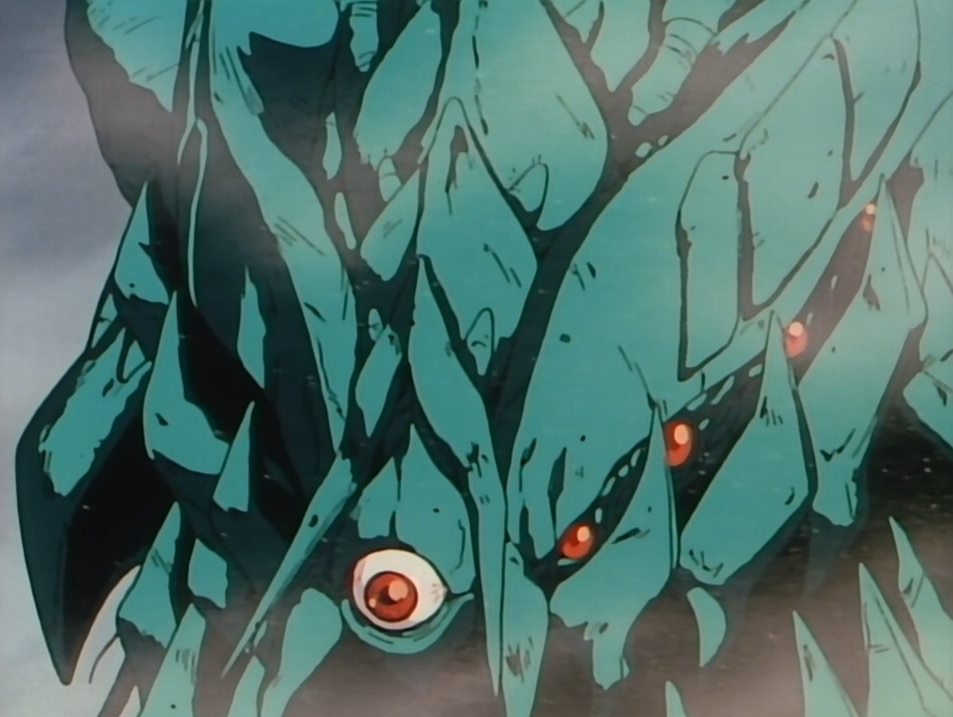
The actual Aragami attacks are exceptionally animated, detailed and smooth, they convey a majestic supernatural aura as they unleash astounding destruction upon human civilization, sometimes grounding the show because of the depiction of gruesome deaths at the claws of the creatures. That's another underrated aspect of Blue Seed, while it is very lighthearted, it never becomes exaggerated or too cartoony with it´s physics, expressions or representation, all of that is appropriately reserved for few and brief mundane scenes, otherwise it's mostly somewhat realistic, something that gives more weight to it´s violence and fills every punch and death with impact.
The show deals with the idea of the battle against fate and destiny, characters are constantly struggling with a certain predisposed flaw or problem and must overcome it in order to prove that they are worth something, specially Momiji, who is very reluctant to fully embrace or be comfortable with what destiny has in store for her.
Among the show´s biggest flaws we have certain rushed and clunkily structured arcs that attempt to give the characters more depth but some of the time they come off as filler or as trivial even. There are only two major parts of the story I wasn't very much convinced by. I think that the anime writers had to expand on the relatively short story the manga featured and this resulted in a mixed bag of good additions and some others that feel shoved in and not very well thought.
The first example is the chief´s arc and relationship with Ryouko, they don't dwell on it for more than a couple of episodes but I don't feel like they add much to the show, it’s just sort of a repetitive plot and goes nowhere interesting. Their whole romantic subplot is sort of shallow and takes up too much time for my taste. Aside from a little too many contrivances here and there.
Also on the negative side we have the main romance between Momiji and Kusanagi. Kusanagi is a real douchebag for most of the series and he barely conveys or shows any real affection or tenderness towards her (at least at the beginning), his attempts at protecting her come off as forced. I get that he aborted his original plans of murdering her but he was cursed not to be able to eliminate her, he did not stop just because of his feelings towards the girl, so I don't think that counts as a sign of true love.
Kusanagi is also a very typical anime pervert who sometimes lifts Momiji´s skirt and calls her names. It isn't the worst anime interaction of its kind, but it doesn't make you warm up to the guy in any way. You can show a relationship that starts out as troublesome and where the two characters are constantly fighting at first but you need to have several instances of them caring for each other and you should never cross the line when one does something bad to the other. Otherwise the pairing comes off as unwarranted and sour. With Kusanagi you get the feeling that he barely cares about Momiji because of the cool bad boy facade the writers gave him. He's too distant and aggressive.
Momiji´s feelings towards Kusanagi are just as contrived and come out of nowhere, I think the show even states it, her reasoning behind her love for him is also flimsy and questionable at best. It's a major part of the show that´s haphazardly implemented and executed. They had an interesting idea regarding Momiji discovering love as she matures but it's not done in a worthwhile manner.
You could also make some nitpicks that come with fiction of its genre, like how it's never clear how the TAC was formed or how it is managed exactly, they apparently have no dress code nor uniforms and the damage the Aragami cause isn't talked about much outside of the main characters (they try to cover up the messes they made but they go on for way too long). None of that really becomes an issue though, it's just kind of funny to think about. They apparently work in some really crappy office building, is that really the place where the world´s most important saviors would be working from? Maybe it's an ironic gag or commentary, the heroes of earth treated like second-rate workers.
It might also be a little too repetitive with its monster-of-the-week formula, which is another issue that comes with adding filler and extending the storyline from the manga. However, it mostly makes the story advance naturally and with well integrated episodic plots, before making everything reach the final stage in the last few episodes, where the stakes are high and the series approaches its emotional conclusion.
Blue Seed is a show that probably could have benefited from being a tight trilogy or duology instead of a whole series, as some of the things that are expanded upon dont work and should have been cut down or extended differently. These faults are not dealbreakers though, as a whole, Blue Seed is an enjoyable and well-crafted fantasy series that captives and moves you with its likable and fun characters, it's more effective dramatic moments and mystical atmosphere (helped by a solid soundtrack). All of this makes it a highly recommended series for anyone into anime who hasn't seen this particular gem yet. Perfect for this october.
Aside from the manga, if you wanna see more of this story you can also check out Blue Seed Beyond (or simply titled Blue Seed 2), a 3-episode OVA mini-series that continues the storyline seen here. We will take a look at both of them this month, so don't miss out on those posts!