Pages

Thursday, October 24, 2024

Species (1995) Review

This film started life as a project titled The Message in 1987 and was inspired by Arthur C. Clarke's comments about an alien arriving to earth through a spacecraft being unlikely, so screenwriter Dennis Feldman decided the extraterrestrial would arrive through information. The concept was changed and spiced up with a female alien-human hybrid who turns more animal-like and after several rewrites we got the 1995 horror thriller directed by Roger Donaldson we know today. 


Species starred Ben Kingsley, Michael Madsen, Alfred Molina, Forest Whitaker, Marg Helgenberger, and Natasha Henstridge as the sexy alien lady. It’s often considered to be top tier 90's trashy horror, featuring some intriguing concepts handled in a rather vulgar way. What could have been a serious alien contact film turned into a strange freakshow blend of sensual chills and action. It's hard to contradict the critics when the concept is about a female alien looking for men to breed with. Having said that, I do believe it's a rather interesting story that not only delivers the sex and violence it promises but also packages it in a nice and round sci-fi adventure.


This is the basic gist: Aliens contact earth and send out instructions for a communication device as well as instructions on how to mix human DNA with alien DNA. The government then decides to create a program with the objective of constructing a human-alien hybrid. The result is Sil, a girl with superhuman abilities. Sil develops at a faster rate than normal humans, going from a baby to a 12-year-old-looking girl in record time. She turns violent and escapes the lab she was created in. Outside, she speedily grows into an adult woman, played by Natasha Henstridge (Ghosts of Mars, She Spies), and looks for a partner to procreate with.


Charming, thrilling, action-packed, deranged and visually appealing, Species is one of the most memorable creature features of its decade. Featuring a captivating performance by Natasha Henstridge as the main lead, the film becomes a wild and unpredictable ride that isn't afraid to turn the tables on you. It's a well told story of  mankind's careless experimentation and ignorance.  


There's lot's of adrenaline fueled action, with impressive practical effects that could have only been done in the 90's before CGI completely took over. There are some rather dated computer effects but nothing too distracting. I think the film still stands to this day in the special effects department.   

H. R. Giger's psychosexual and biomechanical designs are present here as he worked on the film as a concept artist, particularly on Sil's design. I also noticed a lot of elements seen in Alien (1979) that were incorporated into this film's she-creature. Giger also served as a consultant, which explains why the film, while not amazing, manages to have small touches of brilliance. 


I love a fish out of water story, so the first two acts with Sil entering our world were actually very fun to me. You also feel quite bad for the creature, she never wanted to do harm, she mostly acted on instinct and wanted to belong to the world but you do understand why her nature is dangerous to mankind. At first you believe Sil is going to get the E.T treatment and become the heroine, but as the movie progresses she increasingly becomes more vicious and monstrous. It's surprising because they really make you feel for her and suddenly she loses whatever humanity she had left. 


Sil's arc reminds me of not only a typical alien invader movie, but it’s also very similar to Frankenstein, being created in a lab, looking for a mate and being unleashed into a world that doesn't like her and doesn't understand her only to be hunted down. The monster was originally going to die by fire like Frankenstein in its 1931 movie but it was changed to a bullet in the head. Damn. Sil is a solid new interpretation of the Frankenstein story.


It’s also funny seeing how usually supernatural women who hold a sort of power and are aggressive (usually sexually) are portrayed as villainous and “horrible monsters” as the image of the ghastly beastly female can be seen in movies like She Beast (1966), The She-Creature (1956) or in The Wasp Woman (1959) and its 1995 remake, the same year as Species. This movie follows in that formula but I think it adds more compassion for the creature than in previously seen works. So it is a bit progressive, maybe. As always, it’s a small step forward but at least it’s something.

There's a great moment where Ben Kingsley explains that they made the experimental subject female because then it would be more docile and controllable but Michael Madsen’s character replies “More docile and controllable, eh? You guys don't get out much.” It could be just lampshading but the idea that real life and common sense often deny pseudo-scientific notions about sex stereotypes is a very accurate and transgressive critique. 


A perfectly sleazy exploitation film for the season. Relentlessly entertaining and fascinating with its exploration of sexual power and animalistic desires. Species amuses you with its straight-for-the-jugular approach to its rather crude premise.

Natasha would return to the series as Eve (Sil’s offspring) in Species II (1998) and Species III (2004) but the series would then end with Species: The Awakening in 2007. All of them cheaper and dumber but with some fun stuff, however, far removed from the big budget caliber of this first outing.


Tuesday, October 22, 2024

Resident Evil (2002) Review

A Resident Evil feature film was in development as far back as 1997. Zombie genre godfather George Romero was even on board to direct as he had done a Resident Evil 2 game trailer that impressed Sony. Ultimately, the project fell through, but a young director who had been successful with video game movies was hired to direct. Paul W. S. Anderson had helm Mortal Kombat (1995) before and managed to make it economically viable for companies to produce movies based on games, so hiring him to make another one based on a genre he was more than familiar with (having made another horror film, Event Horizon, in 1997) seemed rather obvious. 


In 2002 the first feature length Resident Evil film was released. It starred Milla Jovovich, Michelle Rodriguez, Eric Mabius, James Purefoy, Martin Crewes, Colin Salmon and featured music by Marilyn Manson.  With a budget of 33 million dollars it gained about 103 millions at the box office, opening the possibility to make many, many sequels. However, critical and fan response was not favorable. Many considered it too much of a deviation from the games and labeled it as a seemingly hollow and generic action flick, but at the very least normal audiences enjoyed it as they had no point of reference when it came to comparing them to the games. 

How does it hold up? Let's see. 


The shady Umbrella Corporation has been developing a virus known as T-virus in their underground laboratories. Things turn awry when the virus breaks out and infects the scientists who were working on it. Meanwhile, trapped inside a mysterious mansion, Alice (Milla Jovovich) wakes up not remembering anything about her life. She has an encounter with a group of commandos, an unknown man and a cop. They must find their way through a genetic research facility and hopefully stop the T-virus from spreading, as well as facing off against an artificial intelligence known as the Red Queen.


One of the biggest things you have to get over in order to enjoy these movies is the fact that they don't want to faithfully adapt the video games, they should probably be seen as independent works of fiction inspired by elements from the games, even featuring names, enemies and scenarios from them but never as straight adaptations. Once you do this it will be very easy to digest their deviations and accept them as their own thing. 


W.S. Anderson is quite admirable and perhaps underrated as an action director, as I mentioned in my Alien vs Predator (2004) review, he's one of the few mainstream filmmakers who rely heavily on the audiovisual side of the medium, often relegating plot and dialogue to a secondary level and telling the story purely on cinematic terms. His narration is impeccable here, the opening sequence tells you everything you need to know, there's not one shot that's superfluous, everything is there to convey the events in the story in a crystal clear manner, even down into the smaller details, no element is merely decorative and every action is presented in the most straight fashion possible. He's the master at using style as a device to reach the pure substance, and he only got more radical as the series went on. 


With astounding production values, elaborate production design, vigorous music and beautiful cinematography, Resident Evil is a dazzling experience that aged like fine wine. Most Hollywood products are never this diligent and meticulously executed, it's so rich in detail and craft that it's endlessly entertaining and rewatchable, it moves so fast and with such a relentless energy that it never ends up dragging, it just catches its breath only to continue the ride soon after. The best example is the perfectly executed laser hall sequence that synthesizes the film's strengths to their maximum capacity.

The film probably doesn't stick to the story of the game closely, but it manages to pick up the tension and the videogame timing Resident Evil had to offer. I also like how the zombies resemble the early George Romero creatures more than any other zombie, it was a dead genre at the time (for the most part) but we must realize that the Resident Evil movie was part of the big zombie comeback of the 2000's, it gave it new life.


Another heavy influence on Anderson for this film was probably Aliens (1986), felt via the concept of a special forces team and a solitary heroine who survives the struggle against an army of creatures (not to mention going up against a “queen”). Anderson even has his own "Vasquez" played by the great Michelle Rodriguez, she is often seen playing a tough badass action girl in a secondary role and this movie basically gave her that image (even more so than Girlfight), a kind of double edged sword because it made her relevant in Hollywood but it also kept her away from starring in her own vehicle like other action stars and was only relegated to supporting roles for most of her career. She is quite good in the film and has a lot of the more awesome moments of action, even upstaging Milla in a few scenes.  


However, Milla does shine throughout the film and not accidentally. In real life Milla is Anderson’s wife, they met while making this movie and you can tell by the way the romantic director shoots her, always elevating her image, making her appear otherworldly and precious, treating her like a sublime being above everyone else. This aspect would continue and become more relevant as the series went on.


This first outing in the franchise is dynamic and hyperactive, an unrelenting action rollercoaster that's sure to hypnotize you with its flow of audiovisual storytelling and stimulation. A totally recommended film for horror-action fans and perhaps for people who are willing to give this iteration of the franchise a second try with new eyes. It's not as delirious as the following sequels that were actually directed by Anderson but it’s still a delight. 


Saturday, October 19, 2024

Blue Seed Manga (1992-1996) Review

Let's finish off our Blue Seed anniversary retrospective with the manga that started it all. Supposedly, and contrary to what one would think, the premise of Blue Seed actually came from Ashi Productions and Production I.G, who gave mangaka and writer Yuzo Takada some ideas to develop. From the core concept he drafted and created characters and the overall storyline, taking inspiration from pop culture and genre efforts in order to modernize the original Izumo myth from Japanese folklore. The resulting ShĹŤnen manga was published by Takeshobo in the Comic Ganma magazine from 1992 to 1996 and it only lasted for two volumes and 17.5 chapters.


The overall story is very similar to what we have seen in the anime but there are some significant differences. If you wanna know about the general story you can read my review of the TV series. Since my introduction to the series was the anime, my review of the manga will also compare the two works as my opinion of it is closely related to the way I see the anime but it's not a comparison thats fully tainted as I gave both the same chance, you can also extract the virtues and flaws of each work by what I have to say about them. 


Here are the major differences (without spoilers): 

-The manga puts more emphasis on Momiji and focuses more on telling the story through her point of view instead of alternating between the main cast all the time. The very first scene in the manga is Momiji taking a bath with her grandma, a scene that comes much later in the first episode of the anime. The events are told to us as Momiji learns about them, most of the info is revealed to her and to the audience at the same time, at least in the first chapter. The manga goes for a more mysterious tone because of this.


-The Aragami only attack at night time. This makes them pretty much useless during the day, the creatures have to wait until the sun is covered to attack. This also makes Kusanagi more vulnerable instead of the incredibly powerful hybrid he is in the anime, he has trouble going after Momiji during their first encounter, she even punches him, revealing that he is just another human in the daytime.


-Characterizations are mostly the same but they went through some slight differences in the manga. Momiji is more silly and is stronger in the manga (fighting back more occasionally, even against Koume!) to the point of defeating some Aragami single handedly. Kusanagi is less of a douchebag and comes off as more considerate since he is less antagonistic and goes out of his way to save Momiji´s life instead of simply having no other option. Ryouko is more tough and less formal, a bit of a deviation when compared to the somewhat gentle lady we see in the animated version. 


-The lore and the backstory of the curse and the Aragami are a lot more clearly explained here, the exposition comes off more naturally because it has to be explained to Momiji (us).


-The comedy is less prominent overall and it's implemented in small doses as the tone itself is lighter as a whole, so it wouldn't make sense to have strictly comedic sections. The running gag of Momiji showing her panties is present here but it's not a focus.


-Some characters have more interactions here than in the anime. They also work together as a team in a more traditional fashion than before. Koume and Sakura, for example, share more conversations and moments together than what we see in the TV series.


-A lot of the important plot points in the anime are introduced far earlier in the manga such as the appearance of Kaede and Sakura, making the story feel a bit cluttered at first but they handle the storyline quite efficiently and never allow it to be overstuffed. If anything, I now appreciate the anime for introducing these characters with more room to breathe in between. 


-The secondary characters are sidelined even further here, which is expected, they serve their function very well and enrich the story as their distinct personalities come through and make the characters' interactions more dynamic. While we dont get more insight into them than a few panels or lines we can thank the anime for giving us more memorable moments with them.


-Factions like Japan's defense force have a more active, even antagonizing, role and they put our main group in peril multiple times, allowing for the stakes to be increased and the danger to be more prominent, having to face more than just the Aragami. This also happens in the show but very late into the story.


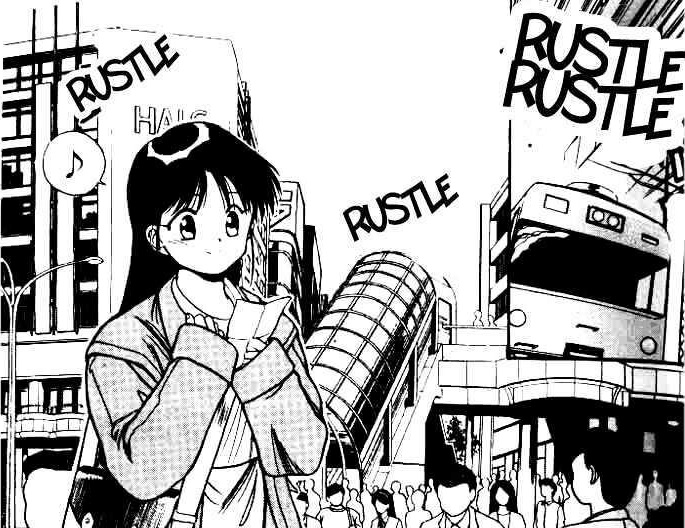
But not everything can be compared, as the manga has some elements that stand on their own. The artwork is detailed and solid for a good amount of the pages, there are typical corners that are cut but not in a distracting manner, the drawings might be a little rough in a handful of panels but it's clear the effort mostly went into the larger and more important illustrations, creating some very memorable images. There are also some really intense stretches of storytelling that require almost no dialogue, playing to the strengths of its medium.


I appreciate the manga and anime for different reasons. The manga has a smaller scale and is considerably more focused while the anime is more bombastic, elongated and epic. The anime has more opportunity to flesh out concepts and ideas and, while it wasn't successful at everything, it managed to inject more life into the story, the additions like the character introductions and more time to show their dynamics made them more memorable and impactful in the anime as well.


Meanwhile, the manga had to resume and convey interactions and information in brief and concrete ways that the show had more time to explore and with more hindsight. A lot of it simply has to do with the medium and the way these works are produced. I will also warn you not to expect an ending, because it doesn't really have one, at least not one that's as truly satisfying and emotional as the one from the anime. 


In my opinion, the manga really required more time and room to develop and fulfill its potential, because two short volumes don't really cut it. A strange thing is that it was never properly continued or extended considering the fact that it was far from a failure. Takada has admitted that Blue Seed would have benefited from being a light novel instead of a short manga, as a lot of the concepts could have been explored further. This is part of why some fans consider the anime show to be the most complete version of the story.


This closes our Blue Seed retrospective. A very nostalgic and enjoyable ride. Totally check out the series as it runs the risk of falling into obscurity after all these years with very little discourse surrounding it, but there are a lot of great aspects that make Blue Seed timeless and lovable.


Featured Post

Cutie Honey (1973) - Action magical girl

Today we are gonna talk briefly about a very influential anime and manga character. Cutie Honey was the creation of masterful manga artist G...

Popular Posts